Welcome to our monthly recap, where we combine the latest in the RNG industry with exclusive Greenlane Renewables updates, as we collectively navigate the path to a more sustainable future.
Some great industry developments are at work as we continue to cover the RNG space!
Greenlane Product News
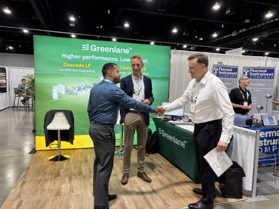
Trade show season continues! The team had a successful exhibition at the RNG Works Technical Workshop and Trade Expo in Milwaukee, WI, on September 15-17. The well-attended presentations by Sebastian Provent and Daniel Bernal sparked engaging technical discussions and allowed the team to present the benefits of the full Cascade product lineup.
On October 6-8, the team will gather in Vancouver, BC, for the Value of Biogas West. The conference brings together project developers, technology providers, and policymakers focused on expanding low-carbon fuel markets, a space where Greenlane's biogas upgrading experience is directly relevant. If you are in town during that time, the team will be happy to welcome you at the Westin Bayshore.
Enjoy these photos from the recent RNG Works Technical Workshop and Trade Expo.
Industry News

Biomethane is a strategic building block of the energy transition.
Biomethane is indispensable for the successful implementation of the energy transition. As a renewable energy carrier, biomethane is already widely used today. In 2025, consumption amounted to 16.3 terawatt-hours (TWh). This corresponds to approximately two percent of Germany's total gas consumption (864 TWh) (sources: German Biogas Association and Federal Network Agency). Biomethane can make a substantial and lasting contribution to climate protection, security of supply, and regional economic development, and can be mobilized quickly using existing gas infrastructure.
“Biomethane is a strategic building block of the energy transition and offers enormous opportunities for decarbonization. Usable potential from domestic feedstocks can be estimated at 110 to 150 TWh per year. That is more than ten times more than is currently used,” said Prof. Dr. Gerald Linke, Chairman of the Board of the DVGW German Technical and Scientific Association for Gas and Water, with regard to climate protection and available volumes.
Read More

A meeting in Fortaleza discussed how to make biomethane projects viable in the Northeast.
The Ministry of Finance and the Bank of the Northeast brought together representatives from the public sector, financial institutions, companies, regulators, associations, and specialists for the Northeast Biomethane Workshop, held on June 15th and 16th in Fortaleza (CE), focusing on structuring projects capable of connecting waste, technology, the consumer market, and financing. The meeting was held in partnership with the Energy Research Company (EPE) and the Climate and Society Institute (iCS).
Discussions revealed that security of waste supply, production scale, logistics, consumer market, contracts, regulation, and access to financing are among the factors that determine the viability of projects and the advancement of biomethane in the region.
The consensus among participants is that the Northeast region of Brazil has a great diversity of waste materials and productive activities, and it is now necessary to transform potential into supply, demand into contracts, and opportunities into projects prepared to receive investments.
Read More

New 45Z Guidance Unlocks Clean Fuel Tax Credit for Biogas and RNG Industry
The American Biogas Council (ABC) today applauded new guidance from the Internal Revenue Service (IRS) that provides a clearer path for renewable natural gas (RNG) producers to use the Section 45Z Clean Fuel Production Tax Credit. The guidance incorporates several provisions requested by ABC to encourage investment in new biogas systems that recycle organic waste into RNG for use as a clean transportation fuel.
Congress created the 45Z tax credit in 2022, but uncertainty over how the credit would apply to RNG and different organic waste feedstocks has contributed to delayed investment and project development. ABC has worked extensively with federal agencies and policymakers under two administrations to ensure the rules accurately recognize the benefits of producing RNG from manure, food waste and other organic materials.
Read More

Feasibility of Grass-to-Gas on dairy farms: a probabilistic techno-economic comparison of renewable natural gas and electricity production
Farm-scale anaerobic digestion (AD) of dairy manure has been economically constrained due to limited financial returns and high investment risks in the U.S. Co-digestion with lignocellulosic biomass, particularly grasses, has been proposed to enhance methane production while providing additional ecosystem services. Using techno-economic and uncertainty analyses, this study evaluates co-digestion of dairy manure with corn stover, switchgrass, and winter rye in a 1,000-cow dairy farm system.
Two biomass sourcing strategies (i.e., on-farm and purchased) and two energy conversion pathways, electricity generation via combined heat and power and renewable natural gas (RNG) production via biogas upgrading, were assessed under existing and alternative policy support. Co-digestion consistently reduced the minimum selling price (MSP) of electricity and RNG relative to manure-only AD; however, electricity generation remained economically infeasible, net present value (NPV) < 0, under current market conditions. RNG production provided substantially greater economic potential, with purchased corn stover and winter rye achieving positive NPVs in 22% and 45% of Monte Carlo simulations, respectively.
Read More
Thank you for your time and interest in Greenlane Renewables, and have a great day!

